
bnb to idr — complete guide to converting binance coin to indonesian rupiah
Table of Contents
1. What is BNB and IDR? 2. Why Convert BNB to IDR 3. How BNB to IDR Conversion Works 4. Where to Convert BNB to IDR (Exchanges & P2P) 5. Fees & Spreads Comparison 6. Real-Time Rates and Tools 7. Step-by-Step: Convert BNB to IDR 8. Example Conversions and Tables 9. Taxes & Regulation in Indonesia 10. Tips to Get the Best Rate and Avoid Scams 11. Security ConsiderationsWhat is BNB and IDR?
If you want a seamless crypto buying experience, go to https://changehero.io/buy/ltc and enjoy fast execution, competitive rates, and an intuitive platform designed for efficiency.
BNB (Binance Coin) is the native token of the Binance ecosystem, used for trading fee discounts, staking, paying for decentralized app services, and as a liquid asset on many exchanges. IDR refers to the Indonesian Rupiah, the sovereign fiat currency of Indonesia. When people search for "bnb to idr" they usually want to know the current conversion rate, how to cash out crypto into local currency, or the steps required to move funds from on-chain BNB to bank-ready IDR.
Understanding both assets is the first step: BNB behaves like a volatile crypto asset priced in USD or other major currencies on markets, while IDR is a stable fiat used for everyday purchases. Converting between them requires an exchange, a peer-to-peer (P2P) trade, or a liquidity provider that supports fiat on-ramps in Indonesia.
Why Convert BNB to IDR
People convert BNB to IDR for several practical reasons: realizing profits, covering living expenses, paying bills, or reallocating investments into local assets. Market volatility can present opportunities to lock gains or limit losses. For Indonesian residents or businesses accepting crypto payments, being able to reliably swap BNB to IDR is essential for cash flow and bookkeeping.
Conversion also matters for remittances and cross-border transactions. With the right platform, converting BNB to IDR can be faster and cheaper than legacy banking rails, especially when using P2P platforms that match buyers and sellers directly.
How BNB to IDR Conversion Works
Converting BNB to IDR typically follows one of three paths: selling BNB on a centralized exchange (CEX) for IDR or a stablecoin and withdrawing to a bank, using a P2P marketplace to sell directly to buyers in IDR, or swapping on a decentralized exchange (DEX) and then converting stablecoins to fiat via a fiat-friendly exchange. Each method has tradeoffs in speed, fees, and privacy.
P2P transactions often require escrow and in-platform dispute resolution, while CEX withdrawals depend on KYC compliance and local banking partners. DEX-to-fiat routes introduce extra steps (swap BNB to USDT/USDC, transfer to a fiat on-ramp exchange) but can be useful when liquidity or listings are limited on local exchanges.
Where to Convert BNB to IDR (Exchanges & P2P)
Not all platforms support direct BNB to IDR trading pairs. Popular options for Indonesian users include large centralized exchanges with IDR fiat pairs, P2P features on Binance or local platforms, and regional exchanges that support rupiah withdrawals. Choose a reputable exchange with good liquidity and clear withdrawal channels to Indonesian banks.
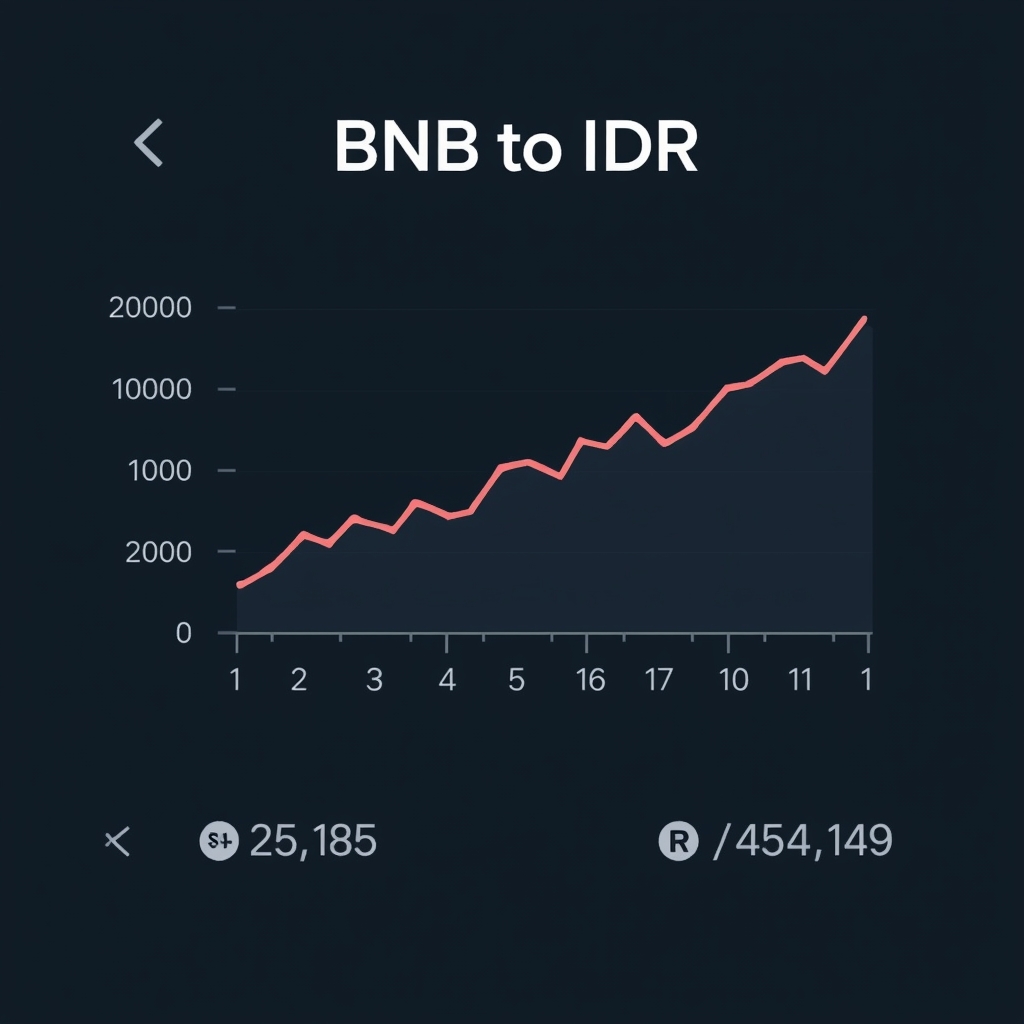
Common choices:
- Binance P2P: widely used, BNB often traded via stablecoins or direct spot pairs.
- Local Indonesian exchanges: some support direct IDR withdrawals but may have limited BNB pairs.
- International CEXs with IDR support: can offer bank transfers or third-party fiat partners.
Fees & Spreads Comparison
Fees and spreads directly affect how much IDR you receive when selling BNB. Trading fees can be a flat percentage, withdrawal fees may apply, and the market spread (difference between buy and sell price) is often the hidden cost. Always calculate total cost: trading fee + withdrawal fee + spread.
| Platform | Typical Trading Fee | Withdrawal to IDR | Spread (approx.) |
|---|---|---|---|
| Binance (P2P) | 0–0.1% (varies) | Instant P2P transfers | 0.5%–1.5% |
| Local Exchange A | 0.2%–0.5% | IDR bank transfer fee | 0.8%–2% |
| International CEX B | 0.1%–0.2% | Third-party fiat on-ramp fee | 1%–3% |
Note: The numbers above are illustrative and change with market conditions. For precise "bnb to idr" outcomes, check live rates and platform fee schedules before executing a trade.
Real-Time Rates and Tools
To get an accurate "bnb to idr" conversion, use tools that aggregate live markets: price tickers on exchanges, crypto market aggregators, and API-based converters. Set up rate alerts to know when BNB hits your target price in IDR terms. Many platforms let you view BNB quoted against stablecoins (USDT, USDC) — convert that to IDR by checking the stablecoin-to-IDR bridge on local exchanges or P2P markets.
Useful tools:
- Exchange tickers (Binance, OKX, local exchanges)
- CoinMarketCap/CoinGecko with currency set to IDR
- P2P orderbook filters to check real buyer offers
Step-by-Step: Convert BNB to IDR
Below is a practical, stepwise process to convert BNB to IDR safely, from preparing your wallet to receiving funds in your bank account. Follow KYC and platform rules to avoid delays.
1. Choose a platform that supports IDR withdrawals (CEX or P2P).
2. Complete KYC verification (if required) and link your bank account.
3. Transfer BNB from your wallet to the exchange deposit address (verify network: BNB Smart Chain vs. BEP2).
4. Place a sell order: market order for speed or limit order for a better rate.
5. For P2P: accept a buyer offer, confirm payment receipt before releasing BNB from escrow.
6. Withdraw IDR to your linked bank account and keep transaction records for accounting and tax purposes.
Example Conversions and Tables
Concrete examples help you understand how market rate, fees, and choice of platform affect final IDR received. Assume a BNB market price of 350 USD and an exchange USD/IDR rate of 15,000 IDR per USD for simplicity. These are illustrative only.
| Scenario | BNB Amount | Gross Value (USD) | USD→IDR Rate | Approx. IDR Received |
|---|---|---|---|---|
| Best-case (low fees) | 1 BNB | 350 | 15,000 | 5,250,000 IDR |
| After 1% fees/spread | 1 BNB | 346.5 | 15,000 | 5,197,500 IDR |
| Higher spread (3%) | 1 BNB | 339.5 | 15,000 | 5,092,500 IDR |
These examples show how even a few percentage points in fees and spread materially change the final "bnb to idr" result. Always run the numbers before trading large amounts.
Taxes & Regulation in Indonesia
Indonesia has been developing rules around digital assets. Cryptocurrency trading and capital gains can be subject to taxation. Businesses accepting payments in crypto must follow financial reporting standards and anti-money-laundering (AML) rules. When converting BNB to IDR, keep detailed records of trade timestamps, prices, and amounts to calculate taxable events accurately.
Key points:
- Report gains/losses according to local tax guidance.
- Comply with KYC/AML requirements on exchanges to avoid transaction holds or freezes.
- Consult a local tax professional for nuanced scenarios like mining income, staking rewards, or business-related crypto flows.
Tips to Get the Best Rate and Avoid Scams
Optimizing your "bnb to idr" conversion means minimizing fees, choosing the right timing, and avoiding fraudulent offers. Here are practical tips that seasoned traders and cash-out users follow:
- Compare mid-market rates across platforms before trading.
- Use limit orders to avoid poor market-price executions during volatility.
- Verify counterparty reputation on P2P: check trade completion rate, ratings, and payment method reliability.
- Beware of offers that are "too good to be true" — scammers often request off-platform payments or provide fake proof of transfer.
Security Considerations
Security is critical when converting crypto to fiat. Use two-factor authentication (2FA), whitelist withdrawal addresses if available, and double-check network compatibility (BNB can exist on BEP2, BSC/BEP20, and other networks). When using P2P, only release funds from escrow after confirming the bank transfer clearance in your account and avoid sharing personal account credentials.
Final security checklist:
1. Enable 2FA and email confirmations for withdrawals.
2. Confirm the deposit address and blockchain network before sending BNB.
3. Keep transaction receipts and screenshots for dispute resolution.
4. Use reputable exchanges and avoid unknown third-party intermediaries.
FAQ
What does BNB to IDR mean and why does it matter?
BNB to IDR is the exchange rate between Binance Coin (BNB) and the Indonesian Rupiah (IDR); it tells you how much IDR you would receive for selling one BNB or how much BNB you can buy with a given amount of IDR — important for trading, remittances, accounting, and price tracking in Indonesia.
How is the BNB to IDR exchange rate determined?
The rate is set by open market supply and demand on exchanges that list BNB/IDR pairs; global BNB USD price, local liquidity, order book depth, and arbitrage between platforms all influence the local IDR rate.
Where can I check the live BNB to IDR price?
Use major exchanges that support IDR (Binance Indonesia, Indodax, Tokocrypto), price aggregators (CoinGecko, CoinMarketCap), and P2P platforms; check multiple sources to spot spreads and liquidity differences.
How do I convert BNB to IDR step by step?
Sell BNB on an exchange that supports IDR pairs or convert BNB to a stablecoin (USDT/USDC) and then trade for IDR on a local exchange; finally withdraw IDR to your bank or e-wallet after KYC and withdrawal approval.
Can I withdraw IDR directly to my Indonesian bank from international exchanges?
Some global exchanges offer IDR fiat rails or P2P options, but for direct bank withdrawals it's generally easier and faster to use local Indonesian exchanges that have integrated banking partners.
What fees should I expect when converting BNB to IDR?
Expect trading fees, withdrawal/bank transfer fees, network fees for on-chain transfers (BNB/BSC gas is low), and a spread between buy and sell prices; P2P transactions may also include seller-specific fees or margins.
How long does it take to convert BNB to IDR and receive funds in my bank?
On-exchange trades execute instantly; withdrawals to a bank can take from minutes to several business days depending on the exchange, payment method, and bank processing times.
Do I need to complete KYC to sell BNB for IDR?
Yes — most regulated Indonesian exchanges and fiat on/off ramps require KYC verification to deposit/withdraw IDR and to comply with AML rules.
Are P2P platforms safe for BNB to IDR transactions?
P2P can be safe if the platform uses escrow, strong reputation systems, and dispute resolution, but risks remain (scams, payment reversals), so follow platform rules and verify counterparties.
How do liquidity and slippage affect converting BNB to IDR?
Low liquidity or large orders can cause slippage: you may receive a worse IDR rate than quoted. Use order books or limit orders and split large transactions to reduce slippage.
What role does BNB network speed and fees play when converting to IDR?
BNB (BSC) offers fast confirmations and low fees, making transfers between wallets and exchanges cheap and quick, which helps minimize delays and on-chain costs before converting to IDR.
How are taxes applied when selling BNB for IDR in Indonesia?
Crypto taxation rules evolve; generally taxable events include capital gains or business income from crypto trading — keep records and consult a tax advisor or local regulations for specifics.
Is it better to sell BNB directly to IDR or convert to a stablecoin first?
Converting to a stablecoin reduces exposure to crypto volatility and can be faster if the local exchange lacks liquidity; selling directly to IDR may be simpler if a liquid BNB/IDR market exists.
What common mistakes should I avoid when converting BNB to IDR?
Ignoring fees and spreads, skipping KYC in advance, trading during low liquidity windows, and not checking withdrawal limits or bank cutoffs can all lead to delays or losses.
Can I use decentralized exchanges (DEXs) to help convert BNB to IDR?
You can swap BNB for stablecoins on DEXs but will need a centralized exchange or P2P fiat on-ramp to turn those stablecoins into IDR and withdraw to a bank.
How do I protect myself from price volatility when converting BNB to IDR?
Use limit orders, convert to stablecoins quickly, stagger sales, or use OTC services for large amounts to reduce market impact and exposure to sudden price swings.
What IDR withdrawal limits and verification tiers should I expect?
Limits vary by exchange and verification tier; basic accounts have lower limits while full KYC verified accounts unlock higher daily/monthly withdrawal caps — always check the exchange’s limit schedule.
Can I use BNB to pay directly in IDR for goods and services?
Direct merchant acceptance of BNB for IDR-denominated purchases is limited; most merchants accept fiat or stablecoins, so convert BNB to IDR or stablecoins first unless the merchant supports crypto payments.
How do regulatory changes in Indonesia affect BNB to IDR conversions?
Regulatory updates (tax guidance, exchange licensing, AML rules) can impact access, KYC requirements, and reporting obligations; stay informed via official sources and your exchange announcements.
Is there a minimum amount I should consider when converting BNB to IDR?
Consider minimum trade sizes, withdrawal minimums, and fee proportionality — very small conversions can be disproportionately affected by fixed fees and spreads.
What is the safest way to store funds while preparing to convert BNB to IDR?
Keep BNB in a secure wallet (hardware or trusted software) until you’re ready to trade; transfer to an exchange only when you plan to sell, and enable 2FA and withdrawal whitelist features.
Comparing volatility: how does BNB price volatility compare to IDR stability?
BNB is a traded crypto asset with significant short-term volatility; IDR is a fiat currency that fluctuates slowly against other fiat currencies — for preserving purchasing power in the short term, IDR is far less volatile.
Comparing liquidity: is it easier to sell BNB or convert IDR to BNB?
BNB markets on major exchanges are typically highly liquid globally; converting IDR to BNB depends on local exchange liquidity for BNB/IDR pairs — large sellers may find better liquidity on global pairs via stablecoins.
Comparing fees: are conversion fees higher when selling BNB to IDR or buying BNB with IDR?
Fees depend on the platform and direction; spreads can be wider on local IDR pairs, and withdrawal bank fees apply when moving IDR out; compare maker/taker fees, spread, and bank costs for both directions.
Comparing speed: which is faster, converting BNB to IDR or IDR to BNB?
On-exchange trades are similarly instant; delays usually come from fiat deposit/withdrawal processing — depositing IDR to buy BNB can be slower if bank transfers are queued, while selling BNB to IDR then withdrawing may also incur bank timing.
Comparing security: is it safer to hold BNB or IDR?
Holding IDR in a regulated bank deposit is generally safer and insured to varying degrees; holding BNB carries custody, smart-contract, and market risks — secure custody and diversification help mitigate crypto risk.
Comparing use cases: when is BNB more useful than IDR and vice versa?
BNB is useful for trading, DeFi, lower-fee on-chain operations, and staking/discounts within Binance ecosystem; IDR is necessary for everyday purchases, bills, and traditional financial obligations in Indonesia.
Comparing tax implications: do BNB transactions or IDR holdings trigger different tax rules?
Realized gains from selling BNB into IDR are more likely taxable as capital gains or business income; holding IDR in cash or bank interest follows conventional income/tax rules—consult local tax law for specifics.
Comparing accessibility: which is easier for Indonesians to acquire, BNB or IDR?
IDR is native currency and trivially accessible; acquiring BNB requires an exchange or P2P transaction and KYC, so IDR is simpler to access and use daily.
Comparing remittance: is sending value via BNB cheaper or sending IDR through banks?
Sending value with BNB can be cheaper and faster across borders due to low BSC fees and near-instant transfers, but converting to local fiat at the recipient end may introduce fees and liquidity considerations; bank transfers can be expensive and slow for international remittance.
Comparing earning potential: is investing in BNB riskier but higher reward than holding IDR?
BNB offers higher potential returns (and losses) due to market volatility and network utility; IDR holdings are stable but provide low real return unless invested in interest-bearing or growth instruments.
Comparing transaction reversibility: can BNB transfers be reversed like IDR bank transfers?
BNB transfers on-chain are irreversible once confirmed; many bank transfers are reversible in limited cases — double-check addresses and use escrow for significant crypto transactions.
Comparing anonymity: are BNB and IDR equally private?
BNB transactions on-chain are pseudonymous and publicly recorded; IDR bank transactions are tied to verified identities — neither offers full anonymity if used with regulated exchanges that require KYC.
Comparing merchant acceptance: will merchants accept BNB or IDR more readily?
Merchants in Indonesia accept IDR widely; BNB acceptance is limited to crypto-friendly vendors — conversion to IDR or stablecoins is often needed for mainstream purchases.
Comparing holding strategies: should I hedge BNB holdings with IDR or stablecoins?
Hedging with IDR removes crypto exposure but requires fiat rails; stablecoins are easier to move on-chain for trading and can act as a bridge to IDR when you’re ready to withdraw.
Comparing price transparency: is the BNB to IDR price as transparent as BNB/USD?
BNB/USD markets are deeper and more liquid globally, offering clearer price discovery; BNB/IDR prices can vary between local platforms due to lower liquidity and wider spreads, so check multiple sources.
Comparing counterparty risk: are I take on more risk converting to IDR via exchanges or holding BNB in a wallet?
Converting through an exchange introduces counterparty risk (custody, solvency, withdrawal delays); holding BNB in a personal wallet removes exchange custody risk but exposes you to key-management and market risks — weigh both when deciding.